
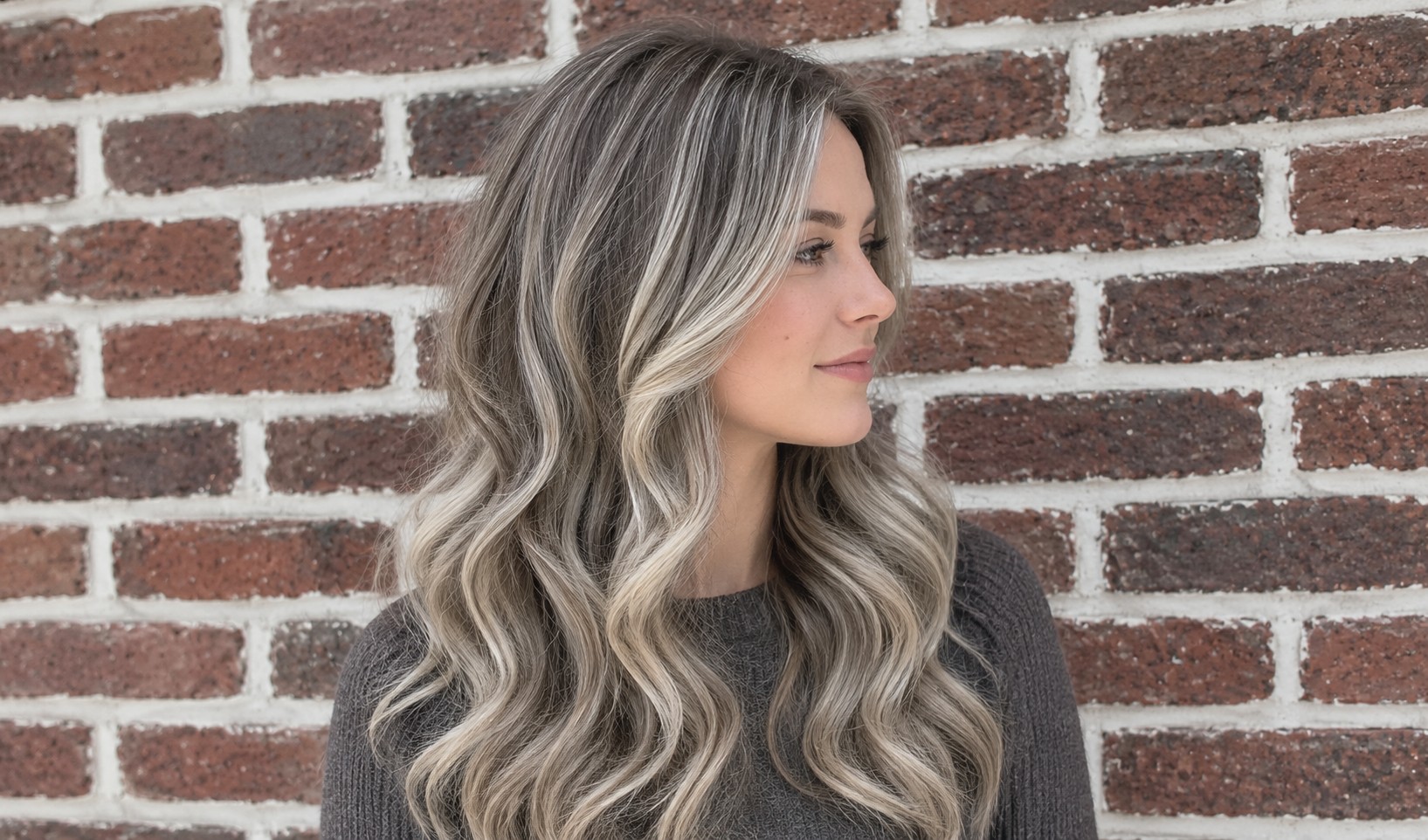
Blending gray hair creates a softer, more natural transition between your natural silver strands and the rest of your hair. Instead of covering every gray strand with one solid color, the technique uses carefully placed highlights, lowlights, toners, or glosses to create dimension and make new growth less noticeable. At Lordis Loft, a luxury Aveda salon and spa in Charleston, hair color services are customized around your natural color, hair condition, gray pattern, and preferred level of maintenance.
Key Takeaways
Gray hair does not need to be completely covered to look polished. A thoughtful blend can make silver strands feel like part of your overall color while creating a softer grow-out.
- Gray blending creates a softer transition than traditional full coverage.
- Highlights can add brightness, while lowlights create depth.
- Toners and glosses can refine the final color and shine.
- The right approach depends on your natural color, gray pattern, and maintenance goals.
What Does Blending Gray Hair Mean?
Blending gray hair means using color techniques that allow natural silver strands to flow into the rest of your hair. Unlike traditional gray coverage, the goal is not always to make every gray strand disappear. Instead, your stylist works with your existing gray pattern to reduce strong contrast and create a more connected appearance. This approach can be especially helpful if you want to transition toward natural gray or simply want your roots to look softer between appointments. The result can be subtle, bright, dimensional, or close to your natural shade.
How Is Gray Blending Different From Gray Coverage?
Traditional gray coverage usually creates a more uniform color by covering gray strands with a chosen shade. While this can provide a consistent and polished result, new gray growth can create a noticeable line against the colored hair. Gray blending takes a different approach. Rather than completely hiding gray, it works with it. Highlights, lowlights, toners, and other color techniques can help break up strong lines and make the transition appear softer. The main difference is the finished effect. Full coverage focuses on hiding gray, while blending focuses on creating harmony between gray and colored strands.
Which Gray Blending Techniques Create a Natural Grow-Out?
There is no single technique that works for everyone. A stylist may combine several methods based on your natural color, gray pattern, previous color services, and desired result. Fine highlights can add brightness around silver strands. Lowlights can provide depth when hair looks too light. Toners and glosses can then help bring the different shades together. The goal is to avoid a flat block of color. Instead, carefully placed tones create movement through the hair and allow natural gray to become part of the overall look.
Can Highlights Help With Blending Gray Roots?
Highlights can be helpful when you want blending gray roots to look softer without coloring the entire head. Fine highlights create small points of brightness that can connect natural silver strands with your existing color.
Placement is important. Your stylist may concentrate highlights around areas where gray is most visible, such as the hairline or parting. This can help reduce the contrast between new growth and previously colored hair. Highlights may also brighten the face and add dimension without making the entire hairstyle noticeably lighter.
When Are Lowlights Better for Gray Blending?
Lowlights can be useful when hair needs more depth instead of additional brightness. They add darker pieces through lighter areas, which can prevent the finished color from looking too pale or flat.
This technique may be particularly helpful for hair that has become very light after repeated highlighting. Adding carefully chosen darker tones can restore dimension while still allowing natural gray to show. The goal is not to create obvious dark streaks. Instead, subtle lowlights should work with your existing color and help the overall blend look balanced.
How Does Gray Hair Color Affect the Blending Process?
Your existing gray hair color plays an important role in choosing the right technique. Gray can appear bright white, soft silver, darker gray, or as a salt-and-pepper combination. Because every person develops gray differently, the same color formula will not produce the same result for everyone. Your natural base also matters. Dark brown hair with scattered silver strands may need a different approach than naturally blonde hair with a high percentage of gray.
Previous color should also be considered. Permanent color, highlights, and lightened ends can respond differently during a new service. A professional assessment helps create a more controlled result.
What Is the Role of Toner and Gloss?
Toner and gloss services can help refine the finished look after highlights or other color work. They can adjust unwanted warmth, improve shine, and help different shades appear more connected. A toner may be used to create a cooler, warmer, brighter, or more neutral result. A gloss can refresh the appearance of colored lengths without necessarily making a major change to the overall shade. These services can be especially useful between larger color appointments when the hair needs a simple refresh rather than a complete transformation.
Can Blending Gray Hair Reduce Salon Maintenance?
Blending gray hair can make new growth less noticeable, which may give you more flexibility between appointments. It does not remove the need for maintenance because hair continues to grow and color can change with washing, heat, sunlight, and styling. The advantage is that you may not feel the need to correct your roots as frequently as you would with a strong, solid color. Your maintenance schedule will depend on your natural gray pattern and the technique used. Some clients may need occasional glossing, while others may return for larger color services less often.
What Should You Ask Your Stylist Before Gray Blending?
A consultation is important because gray blending should be customized to your hair. Your stylist can examine your current color, natural gray pattern, hair condition, and previous services before recommending a technique. It is also helpful to explain how often you want to visit the salon. Someone who wants very low maintenance may need a different color plan from someone who enjoys frequent appointments. Consider asking how much of your natural gray can remain visible, whether highlights or lowlights would work better, and how often the color may need refreshing.
How Can You Keep a Gray-Blended Look Fresh?
Good home care can help maintain the appearance and condition of gray-blended hair. Color-treated hair can become dry or dull when exposed to frequent heat styling, excessive washing, or strong environmental factors. Use products recommended for your hair type and color needs. Heat protection is also important when using styling tools. Regular trims can help keep the hairstyle polished while your color grows out. A simple maintenance routine can include gentle cleansing, conditioning, heat protection, and occasional professional color refreshes.
Can Gray Blending Work With Creative Hair Color?
Gray blending does not mean you have to stay with traditional blonde, beige, or silver shades. Natural gray can also become part of a creative color design when the shade and placement are carefully planned.
For example, a money piece can be used as a face-framing accent when it complements the client’s existing color, style, and natural gray pattern. The placement should support the gray rather than create unwanted contrast. Creative color techniques can add more dimension to a gray-blended look, but they may require additional maintenance. Discuss the expected upkeep with your stylist before choosing a more noticeable color technique.
How Do You Choose the Right Gray Blending Approach?
The best approach depends on your current hair and the result you want as it grows. Someone with a small amount of gray may need only a few fine highlights. Someone with a strong salt-and-pepper pattern may benefit from a broader color blend. Your lifestyle is also important. If you prefer fewer salon visits, a softer transition may be more suitable. If you enjoy regular color appointments, your stylist may create more detailed highlights, lowlights, or tonal changes. Consider your natural gray placement, existing color, hair health, desired brightness, and preferred appointment schedule before choosing a technique.
Why Professional Gray Blending Can Be Worth It
Gray blending may appear simple, but color placement and tone can significantly affect the final result. A professional can assess how your natural gray is growing in and determine which techniques will create the most natural transition.
At Lordis Loft, salon hair services are customized through a consultation. The salon offers color, balayage, highlights, foils, and tonal or glaze finishes, allowing the color plan to be adapted to each guest’s hair and desired result. Professional gray blending can help you avoid overly strong root lines and create a color plan that works with your natural hair instead of constantly fighting against it.
Is Gray Blending Right for You?
Gray blending can be a good option if you want your natural silver strands to become part of your overall hairstyle rather than something you constantly need to cover. It allows you to maintain some natural gray while adding dimension and polish. If you are searching for the best hair salon in Charleston has for a customized color experience, a consultation can help you understand which technique suits your hair. Lordis Loft offers personalized salon hair services using Aveda color products.
For an added styling experience, the salon also offers an Aveda blow dry bar charleston sc service. This can be a useful option when you want professionally styled hair after a color appointment or before a special event.
Final Thoughts
Gray blending is about creating balance between your natural silver strands and your chosen hair color. Instead of completely covering gray, the right combination of highlights, lowlights, toners, and glosses can make it look intentional, dimensional, and easier to maintain. The best technique depends on your natural color, gray pattern, hair condition, previous color services, and lifestyle. A personalized consultation can help you understand what will work best and how much maintenance your desired result may require. At Lordis Loft, the focus is on creating customized hair services around each guest’s individual goals. Whether you want a subtle transition or a more dimensional gray-blended look, a professional consultation is the best place to begin. Ready to create a softer, more natural gray grow-out? Contact Lordis Loft today to schedule a consultation and discuss the gray-blending look you want.
FAQs
No. Gray blending usually softens gray rather than completely covering every strand.
The results vary, but blending can make new growth less noticeable between appointments.
Yes. The technique can be adjusted for dark, medium, blonde, or naturally gray hair.
Yes. A subtle money piece can brighten the face and complement natural gray around the hairline.
The effect depends on the color technique and your hair condition. A professional can choose a suitable approach.

Comments are closed.